
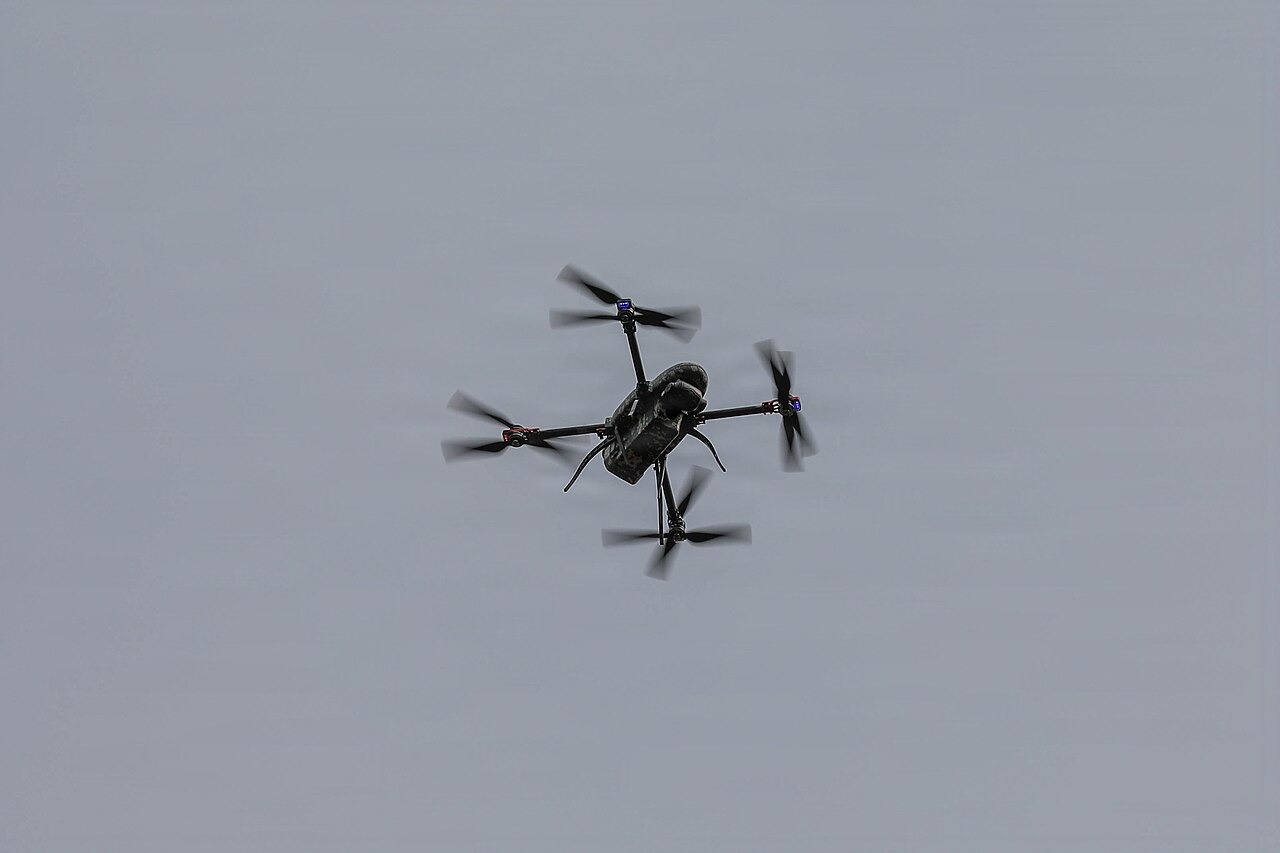
Turkey’s Ateş Serbest live-fire exercise provided the first reported public showing of Turkish Aerospace Industries’ Ayaz, a turbojet-powered one-way attack unmanned aerial vehicle, according to Breaking Defense’s field report. The report describes the Ayaz as nearly complete on an assembly line; it does not establish that the aircraft entered operational service.
The same report says the exercise marked the first time TAI’s Super Simsek flew with a warhead after its 2023 maiden flight. A company official told Breaking Defense that both the Ayaz and Super Simsek conducted dive attacks and struck targets during the exercise using live warheads. That account is attributed to the company rather than independently verified in the report.
The demonstrations also showed different levels of human involvement. Twenty STM Kargu one-way attack drones flew in swarms, sharing real-time data with one another and with an operator. Breaking Defense reported that the platforms divided into two categories as they approached simulated enemy infantry and then headed toward their targets, but it did not describe the decision logic or identify which actions were automated.
At the command level, soldiers used artificial intelligence to help control unmanned systems and conduct intelligence, surveillance and reconnaissance missions. Information from ISR drones was gathered at a Mobile Command System to help soldiers decide whether to strike, indicating that the reported workflow retained a human decision point for the strike determination.
DASAL separately describes its own exercise demonstrations as involving military personnel operating its systems. The company says MİKON Gözükara UAVs launched from a guard-post integration and engaged a simulated sniper team under control from an underground position, while its PUHU C75 cargo UAV completed what DASAL calls a fully autonomous flight delivering ammunition to frontline units (DASAL account). The account does not provide flight parameters, navigation architecture or evidence from an independent evaluator.
Taken together, the exercise demonstrated attack, surveillance, logistics and infrastructure-integrated missions. It did not, on the available evidence, establish the systems’ performance under contested communications, their production quantities or their operational deployment beyond the Turkish military inventory claims.